
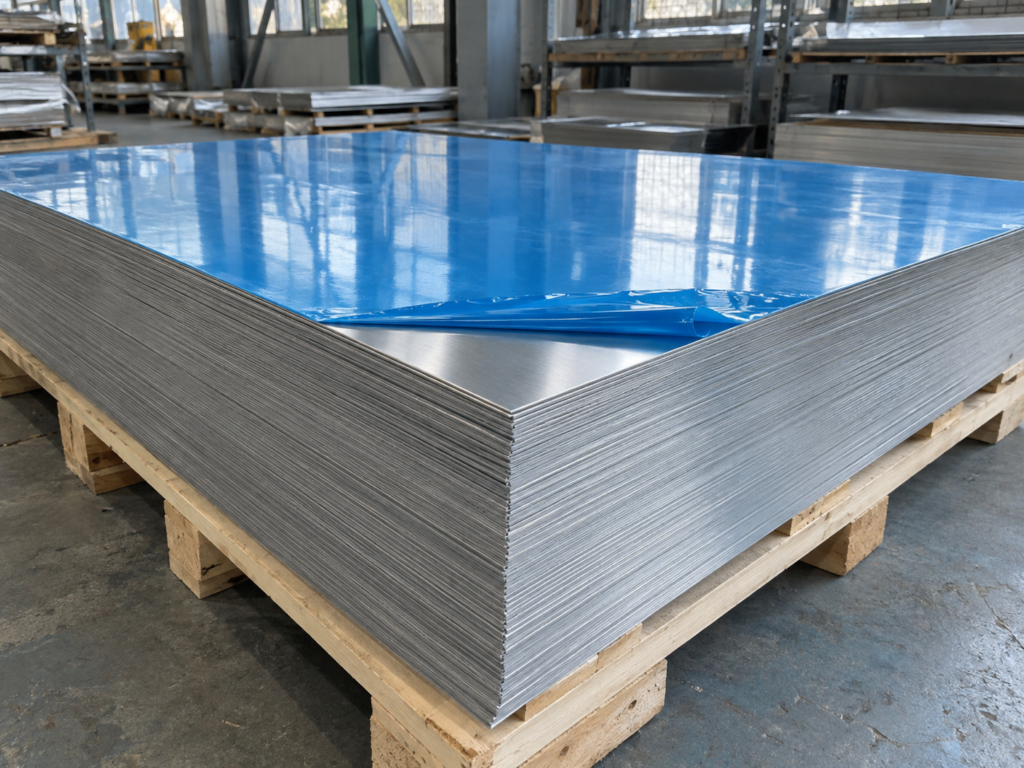
5052-H32
Aluminum Sheet
A practical aluminum sheet choice for formed panels and welded sheet-metal assemblies that need corrosion resistance, low weight and useful strength. Explore the composition, temper, dimensional options and fabrication considerations below.
01 / MATERIAL & ADVANTAGESStrength with Practical Fabrication
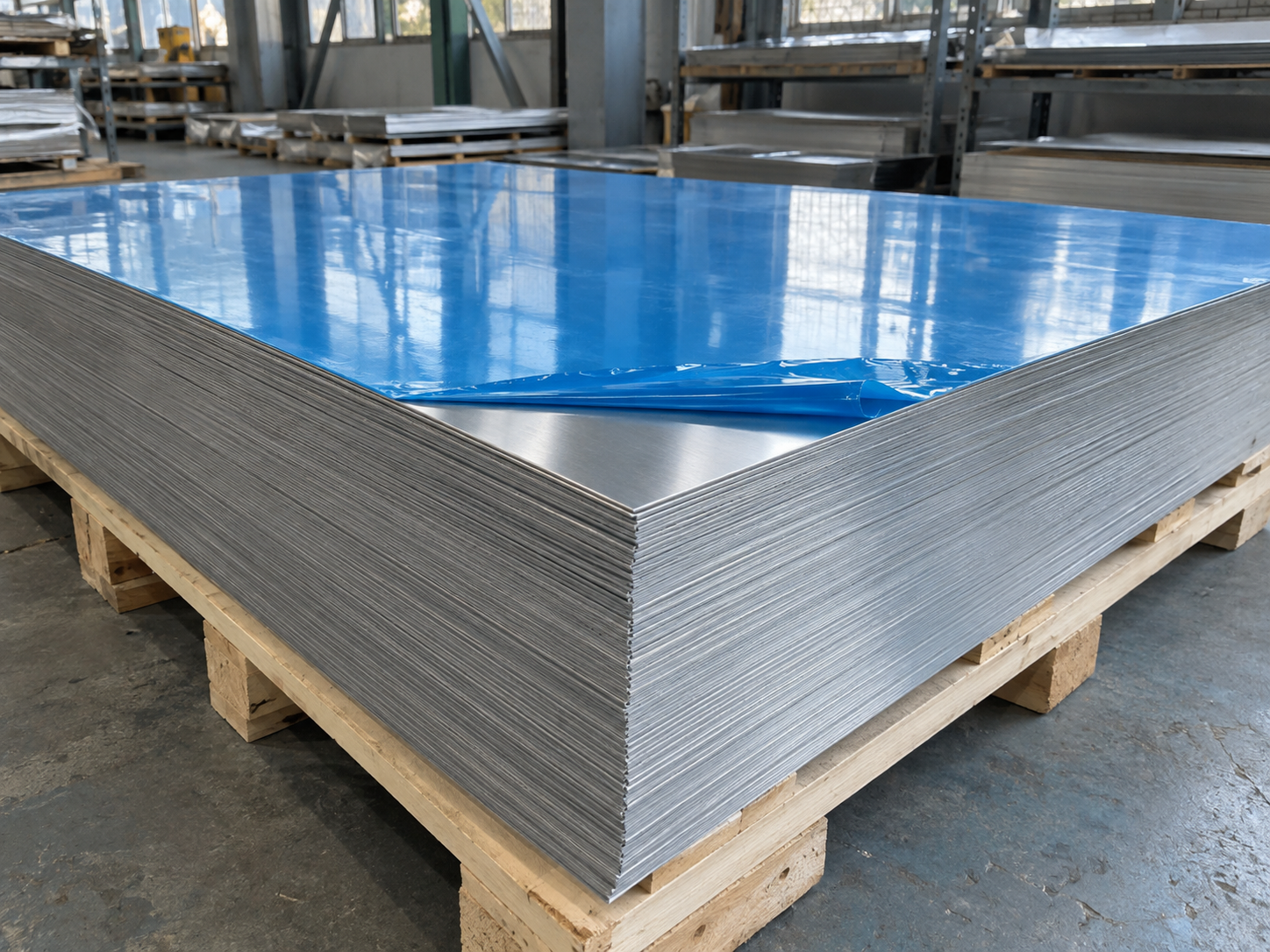
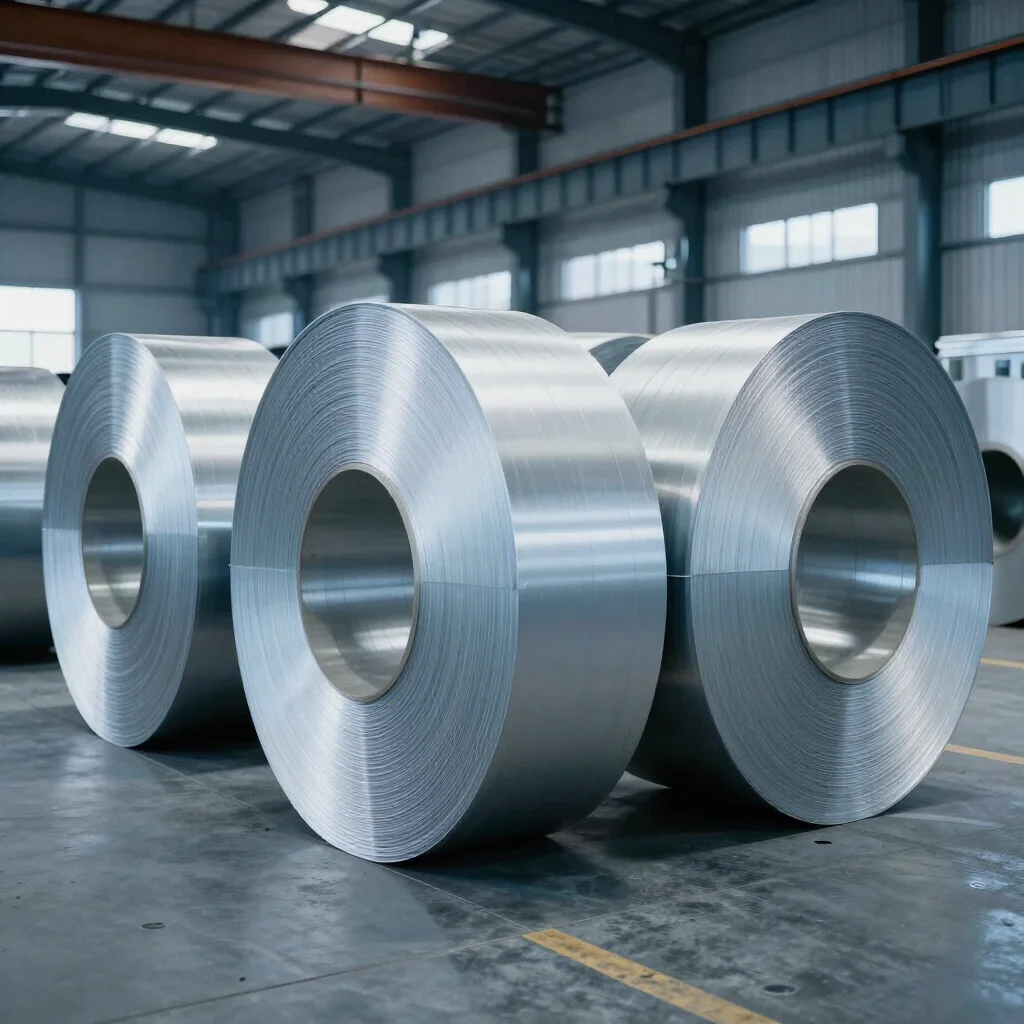
5052 is an aluminum–magnesium alloy strengthened by cold working rather than precipitation heat treatment. H32 identifies strain hardening followed by stabilization to a quarter-hard condition. It is a useful starting point for parts that combine bends, joining and exposed surfaces. For continuous-feed production in the same alloy and temper, see 5052-H32 aluminum coil; compare 3003-H14 aluminum sheet for an alternative general-purpose sheet alloy.
Corrosion Resistance
Suitable for many atmospheric and marine-exposure applications. Drainage, surface condition and contact with dissimilar metals still matter.
Forming & Bending
Useful for folded covers and panels. Choose bend radii and tooling around the actual thickness and grain direction.
Weldability
Compatible with established aluminum welding methods. Welded-zone properties must be considered in the finished design.
Low Mass
Sheet size and thickness determine handling weight. Use the weight guide below when planning blanks and shipments.
Surface Protection
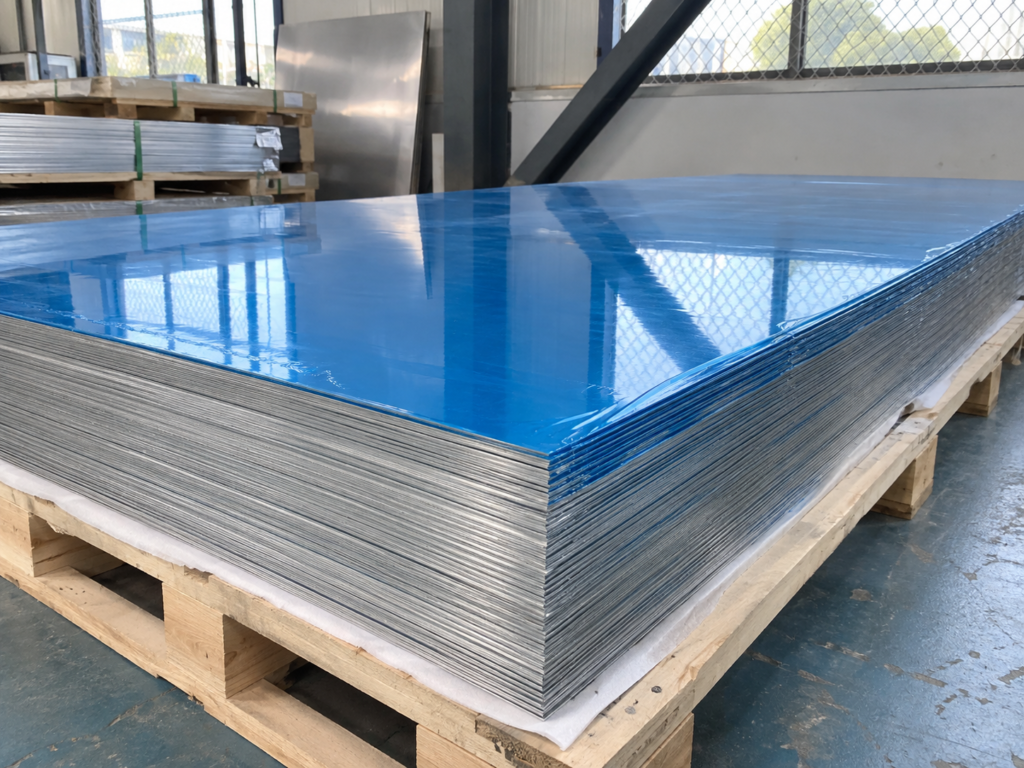
Specify removable film for visible faces and confirm its suitability for cutting, storage and removal.
Clear Ordering
Define temper, tolerances and acceptance criteria together so the supplied sheet matches the drawing.
02 / CHEMICAL COMPOSITION5052 Alloy Composition
Composition limits below are expressed as mass percentages. They describe the alloy specification, not a measured analysis of a particular batch.
| Element | Limit · wt.% |
|---|---|
| Magnesium · Mg | 2.2–2.8 |
| Chromium · Cr | 0.15–0.35 |
| Silicon · Si | ≤0.25 |
| Iron · Fe | ≤0.40 |
| Copper · Cu | ≤0.10 |
| Manganese · Mn | ≤0.10 |
| Zinc · Zn | ≤0.10 |
| Other elements · each | ≤0.05 |
| Other elements · total | ≤0.15 |
| Aluminum · Al | Balance |
Magnesium is the principal alloying addition; chromium is a controlled minor addition. For traceability, request the batch chemistry and the agreed material certificate with the order.
03 / MECHANICAL PERFORMANCEH32 Properties Depend on Thickness
*Reference basis: the following H32 limits are summarized from the Atlas Steels flat-rolled 5052 datasheet, which references ASTM B209M. Confirm the current purchase standard, edition, thickness and test conditions before using them as acceptance limits.
| Sheet thickness · mm | Tensile strength · MPa | 0.2% proof strength · MPa | Elongation · min., 50 mm gauge |
|---|---|---|---|
| 0.33–0.63 | 215–265 | 160 min. | 4% |
| 0.64–1.20 | 215–265 | 160 min. | 5% |
| 1.21–6.30 | 215–265 | 160 min. | 7% |
These reference limits are not a certificate for stock on hand. Other standards and supplier specifications may give different limits. Do not mix one standard’s strength limits with another standard’s elongation criteria.
H32 is not interchangeable with O, H34 or H22 merely because the alloy number is the same. Welding and local heating may soften strain-hardened material; assess properties in the final fabricated condition.
04 / PHYSICAL PROPERTIESUseful Material Parameters
| Property | Typical reference value | Use in planning |
|---|---|---|
| Density | 2,680 kg/m³ · 2.68 g/cm³ | Estimate sheet and shipment mass |
| Elastic modulus | Approximately 70 GPa | Elastic deflection calculations |
| Thermal expansion · 20–100°C | 23.8 × 10⁻⁶/K | Allow for dimensional change |
| Thermal conductivity · 25°C | Approximately 138 W/(m·K) | Preliminary heat-transfer assessment |
| Electrical resistivity | Approximately 50 nΩ·m | Preliminary electrical assessment |
Typical alloy values are indicative and are not guaranteed batch test results. Temperature, processing and material condition influence performance.
05 / COMMON SIZES & WEIGHTPlan Your Blanks and Sheet Layout
The following are common enquiry sizes and practical starting points for quotation. They are not a live stock list; confirm the available thickness–width–length combination.
| Parameter | Common enquiry options · mm |
|---|---|
| Thickness | 0.5, 0.8, 1.0, 1.2, 1.5, 2.0, 2.5, 3.0, 4.0, 5.0, 6.0 |
| Metric sheet formats | 1000 × 2000; 1250 × 2500; 1500 × 3000 |
| Imperial-format reference | 4 × 8 ft = 1219.2 × 2438.4 mm; confirm nominal supplied dimensions |
| Cut blanks | Width and length to drawing, subject to processing confirmation |
| Surface | Mill finish; protective film on specified face(s), by agreement |
| Tolerances | Thickness, width, length, flatness, squareness and burr limits to agreed specification |
| Example sheet · mm | Calculated mass · kg/sheet |
|---|---|
| 1.0 × 1000 × 2000 | 5.36 |
| 1.5 × 1250 × 2500 | 12.56 |
| 2.0 × 1250 × 2500 | 16.75 |
| 3.0 × 1500 × 3000 | 36.18 |
Allow for actual thickness tolerance when estimating total shipping weight. For fabrication, distinguish incoming stock dimensions from finished-part dimensions.
06 / SURFACE & EDGE DETAILSProtect the Face That Matters
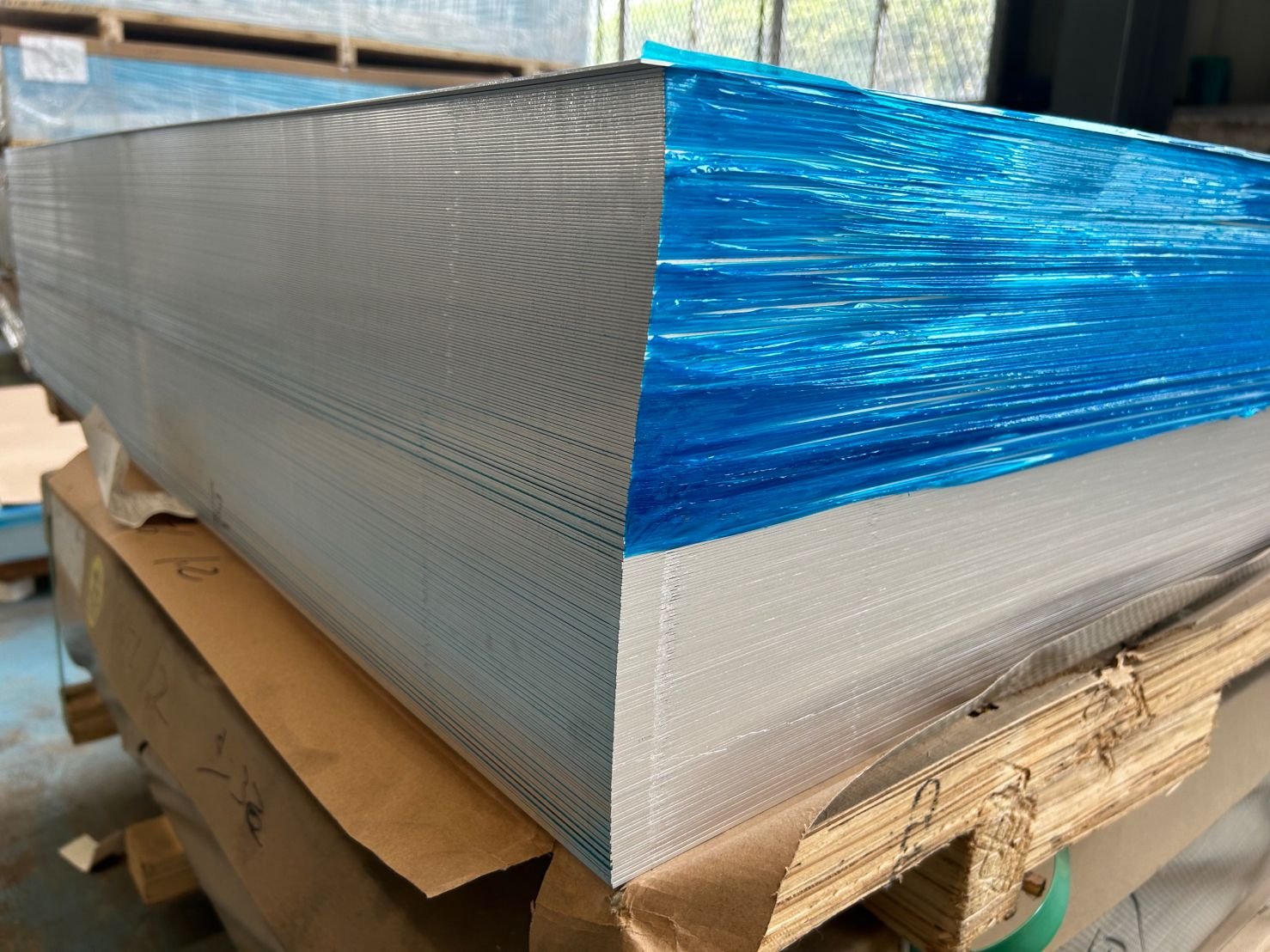
Film & Sheet Edges
Specify which face is cosmetic, whether one or both faces need film, and how the sheet will be processed. Inspect exposed cut edges for burrs and damage before forming.
Agree on film adhesion and removal requirements, including storage time and exposure to heat. Film protects handling surfaces but does not replace dry storage or careful stacking.
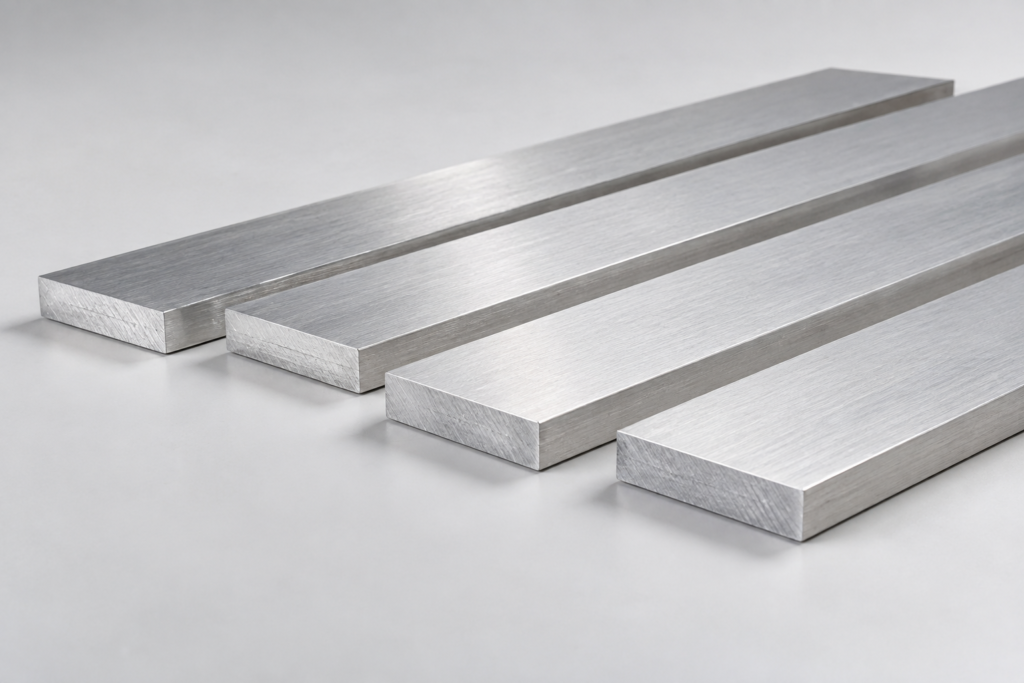
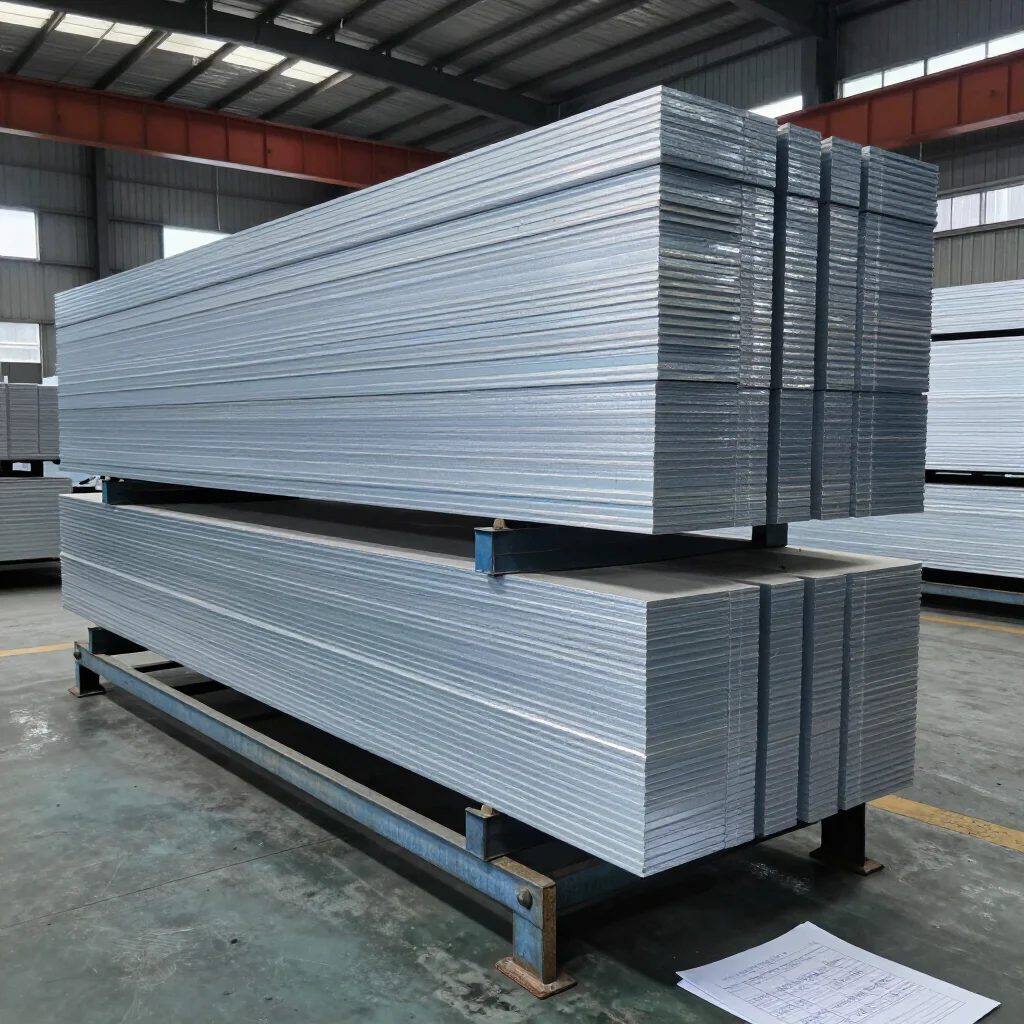
Surface and packing images illustrate presentation; confirm alloy and temper through batch identification and documentation.
07 / FABRICATION CHARACTERISTICSFrom Flat Sheet to Finished Part
| Process | Material behavior | What to specify |
|---|---|---|
| Bending & forming | Cold forming is practical; repeated forming work-hardens the material. | Inside radius, bend direction, tooling and cosmetic-face protection; validate with a trial piece. |
| Cutting & punching | Suitable for sheet-metal blank preparation. | Edge quality, hole positions, burr orientation and finishing allowance. |
| Welding | Commonly fabricated by MIG or TIG; allow for heat-affected-zone softening. | Qualified procedure, filler selection, joint preparation and distortion control. |
| Machining | H32 is less suited to free-cutting machining than dedicated machining alloys. | Tooling, lubrication and trial finish on critical surfaces. |
| Finishing | Surface treatment must suit the required appearance and service exposure. | Coating system, preparation, color, masking and acceptance sample. |
Processing services and achievable tolerances are confirmed against the drawing. H32 alone does not specify precision flatness or guarantee a particular bend radius.
08 / APPLICATIONSMatch the Material to the Job
Equipment Enclosures
Folded cabinets, access panels and covers where low mass and practical forming are useful. Specify the visible face and fastening details.
Transport Panels
Fabricated interior panels, covers and tool-box components designed for the actual loading and vibration environment.
Marine-Exposure Components
Panels and small fabricated components where the exposure and joining details suit 5052. Hull or regulated applications need the required design and material approval.
Appliance & Cabinet Parts
Formed panels and housings that benefit from a cleanable surface and appropriate finish.
Architectural Panels
Cut and folded panels specified with coating, fixing, expansion and drainage requirements.
General Fabricated Assemblies
Sheet-metal blanks and welded components supplied to an agreed drawing and inspection plan.
09 / PACKING & QUALITY CHECKSKeep the Sheet Ready for Fabrication
Packaging to Suit Handling
Confirm pallet dimensions, package weight, interleaving, edge protection and moisture-resistant outer packaging. Keep lifting points accessible and avoid concentrated loads on thin sheet.
Incoming Inspection
- Verify grade, temper, quantity and batch labels.
- Measure thickness and specified dimensions.
- Check flatness, edges and surface protection.
- Review chemistry and mechanical test records when ordered.
10 / SELECTION FAQSBefore You Order
Is H32 a heat-treated strengthening condition?
No. It is strain-hardened and stabilized to a quarter-hard condition. The stabilizing treatment is different from precipitation hardening.
Are these mechanical values guaranteed for every sheet?
No. The table is a clearly identified reference. Acceptance values depend on the agreed standard, thickness and delivered batch.
Is the blue protective film standard?
Specify the covered face or faces and film requirements in the enquiry; inclusion is confirmed in the quotation.
Can another alloy or temper be substituted?
Substitution requires agreement against the drawing and intended use. A similar name or appearance does not establish equivalence.
11 / ORDERING GUIDESend a Complete Enquiry
Product: 5052-H32 Aluminum Sheet.
Please provide: thickness × width × length; sheet count or total weight; applicable standard and edition; dimensional tolerances; surface and film requirements; packing preferences; destination; and material documentation requirements.
Attach drawings for cut or formed parts and identify critical dimensions. Availability, minimum order quantity, processing scope, price and lead time are subject to quotation.
Reviews
There are no reviews yet.