
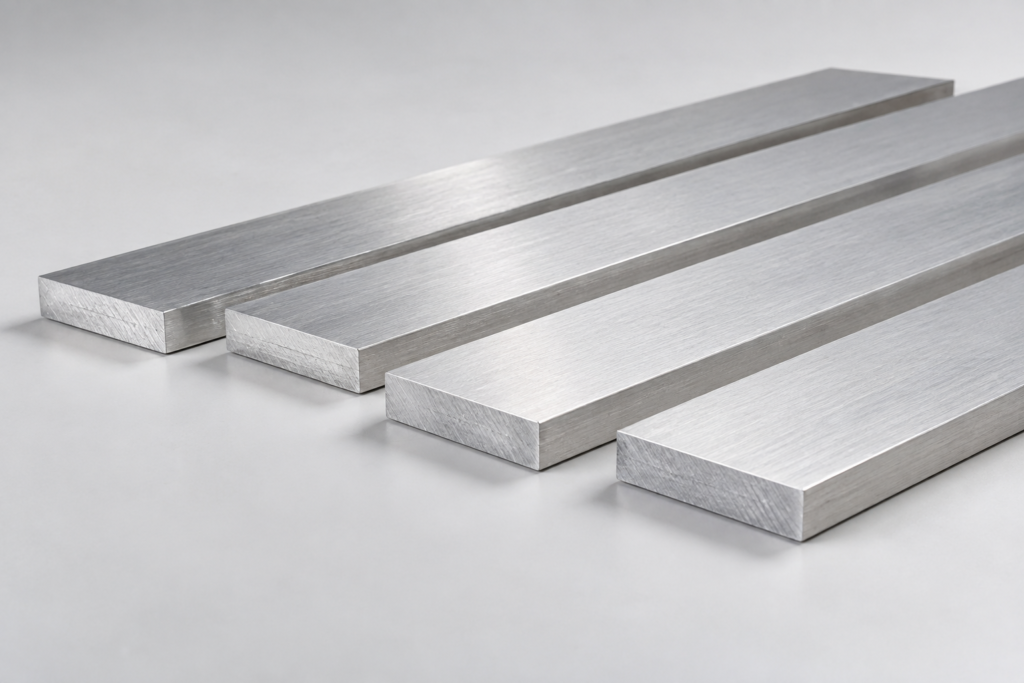
6061-T6
Aluminum Flat Bar
A practical starting point for brackets, machine fixtures and lightweight assemblies. Specify the section you need, then build a supply package around cutting, machining, inspection and delivery.
Solid rectangular section · Mill finish · Cut-to-size enquiries
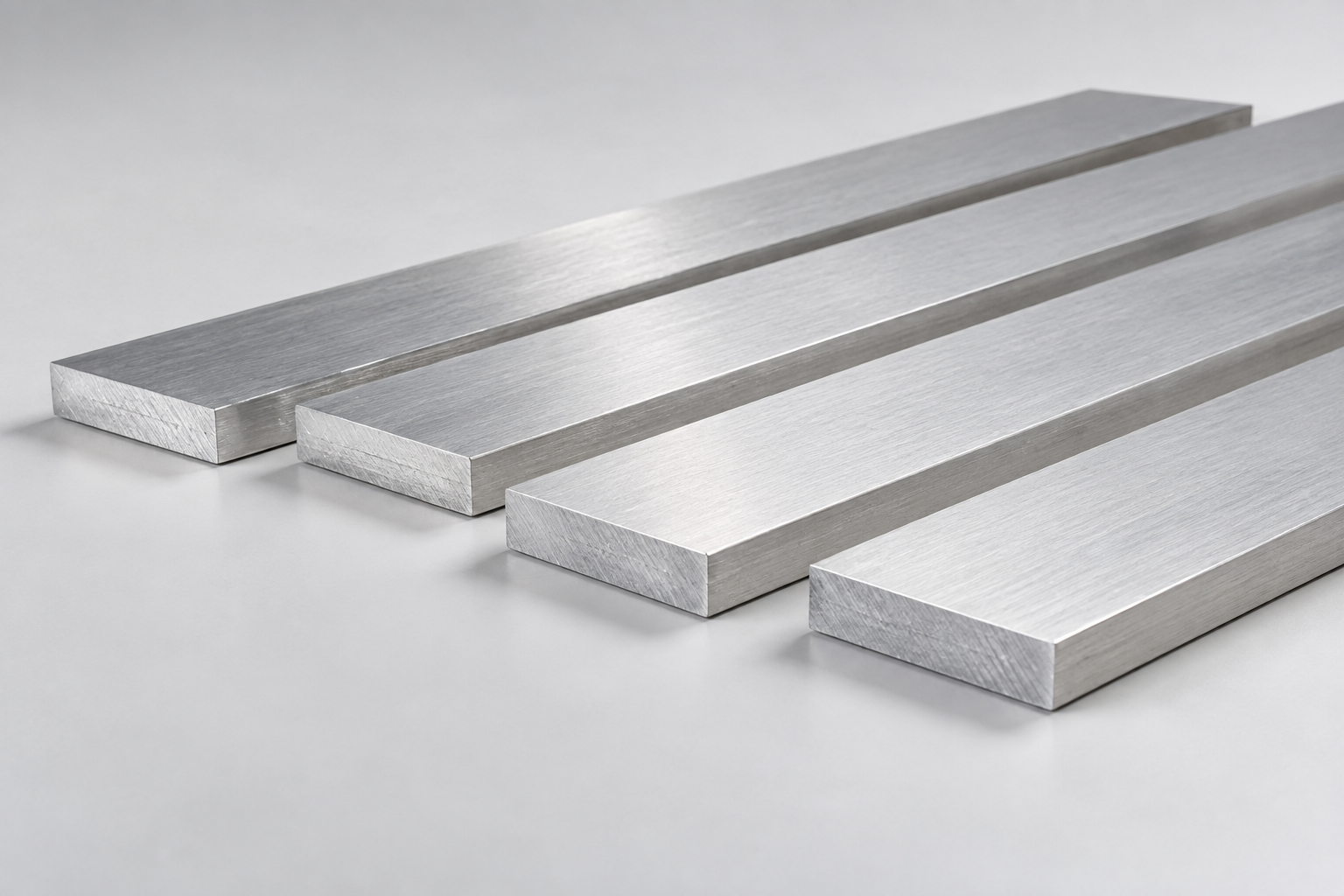
One material. Several useful jobs.
Choose aluminum flat bar when a rectangular blank reduces the material removal, cutting steps or handling needed to reach your finished part.
Machinery & automation
Sensor mounts, connecting plates, guide supports, equipment brackets and fixture elements. A flat section gives a convenient face for drilling, tapping and locating.
Transport & lightweight structures
Equipment supports, mounting straps and non-critical vehicle or trailer components. Final section size, weld design and fatigue requirements must follow the application.
Thermal & general fabrication
Heat-spreading strips, mounting bases, jigs and prototype parts. Thermal contact, surface flatness and insulation requirements should be defined with the drawing.
Thickness × width × length.
Tell us the finished size and whether machining allowance is needed. Extruded flat bar and strip cut from plate can look similar but have different tolerances, edge conditions and temper designations. For cylindrical blanks, explore 6061-T6 aluminum round bar; for wider flat components, compare 6061-T6铝板.
Common enquiry dimensions
厚度: 3, 4, 5, 6, 8, 10, 12, 15, 20 和 25 毫米.
宽度: 20, 25, 30, 40, 50, 60, 75, 100, 125 和 150 毫米.
长度: enquire for 1, 2, 3 或者 6 米, or drawing-specific cut lengths.
Specify the manufacturing route
Extruded bar: longitudinal extrusion marks and mill edges; define thickness, 宽度, straightness, twist, corner radius and cut-length tolerances.
Precision-machined blank: define finished dimensions, datums, 平整度, parallelism, surface roughness and edge break on the drawing.
脾气: T6 does not itself mean stretch stress-relieved. T6511 extrusions and T651 plate-derived blanks require separate confirmation and correct material identification.
Useful sizes & theoretical weights
| Thickness × width (毫米) | Weight (kg/m) | 3 m piece (千克) | Typical starting point |
|---|---|---|---|
| 3 × 20 | 0.162 | 0.486 | Light spacers |
| 5 × 25 | 0.338 | 1.013 | Small brackets |
| 6 × 50 | 0.810 | 2.430 | Mounting strips |
| 8 × 50 | 1.080 | 3.240 | General fixtures |
| 10 × 50 | 1.350 | 4.050 | Machined brackets |
| 10 × 100 | 2.700 | 8.100 | Wide mounting plates |
| 12 × 50 | 1.620 | 4.860 | Support blocks |
| 15 × 100 | 4.050 | 12.150 | Machining blanks |
| 20 × 100 | 5.400 | 16.200 | Heavy fixture blanks |
| 25 × 100 | 6.750 | 20.250 | Thicker stock |
Chemistry, clearly specified.
6061 is an aluminum–magnesium–silicon alloy with controlled copper and chromium additions. The chemistry identifies the alloy; the temper and manufacturing route establish the condition of supply.
| 元素 | Content, wt.% | Specification reading |
|---|---|---|
| Magnesium · Mg | 0.80–1.20 | Controlled range |
| Silicon · Si | 0.40–0.80 | Controlled range |
| Copper · Cu | 0.15–0.40 | Controlled range |
| Chromium · Cr | 0.04–0.35 | Controlled range |
| Iron · Fe | ≤ 0.70 | Maximum |
| Manganese · Mn | ≤ 0.15 | Maximum |
| Zinc · Zn | ≤ 0.25 | Maximum |
| Titanium · Ti | ≤ 0.15 | Maximum |
| 其他元素 | ≤ 0.05 每个; ≤ 0.15 total | Residual limits |
| Aluminum · Al | Remainder | Balance |
What gives T6 its character?
Magnesium and silicon enable precipitation strengthening during heat treatment. T6 denotes solution heat treatment followed by artificial aging. It is a useful condition when the part needs strength and will be machined or assembled.
What should the report show?
Request the alloy, 脾气, manufacturing specification, heat or lot identification and actual chemical analysis. Link those records to the delivered bundles or pieces.
What chemistry does not prove
A composition check alone does not verify the temper, tensile strength, dimensions or suitability of a finished component. Those checks need their own agreed evidence.
Typical values are not minimum limits.
Use these values for material comparison. Purchase acceptance must specify the product form, thickness range, test direction, specimen and applicable standard.
Mechanical reference data
| 财产 | Typical T6 / T651 reference | How to use it |
|---|---|---|
| Ultimate tensile strength | 310 MPa · 45 ksi | 参考值, not a guaranteed minimum |
| 0.2% proof / yield strength | 276 MPa · 40 ksi | Reference for onset of permanent deformation |
| Elongation | 17% | 0.500 in diameter specimen; 4D gauge length |
| Brinell hardness | 95 HB | 10 mm ball, 500 kg load |
| Ultimate shear strength | 207 MPa · 30 ksi | Typical laboratory value |
| 弹性模量 | 68.3 GPa | Use approximately 69 GPa for preliminary comparison |
Physical parameters
| Parameter | Typical value | Condition / interpretation |
|---|---|---|
| Density | 2.70 g/cm³ · 2700 公斤/立方米 | 20°C; theoretical weight basis |
| Melting interval | 582–652°C | Not a service-temperature rating |
| 导热系数 | 167 带/(m·K) | T6 / T651, near room temperature |
| 电导率 | 43% 国际化学学会 | Equal-volume basis, near 20°C |
| Specific heat | 896 J/(kg·K) | At 100°C |
| Linear thermal expansion | 23.6 × 10⁻⁶ /K | Average over 20–100°C |
焊接 & 弯曲
6061 can be welded, but welding locally reduces T6 strength. Evaluate the heat-affected zone and the complete joint. Tight cold bends can crack T6 material; review bend radius, thickness and grain direction, or consider a softer forming condition.
加工 & dimensional stability
Plan a balanced roughing sequence for heavily machined parts. Thin sections and deep pockets may move as residual stresses are released. Stress-relieved material, staged machining and finish inspection can be specified where appropriate.
Choose the alloy for the job.
Material substitution needs more than matching dimensions. Compare strength, stiffness, corrosion exposure, joining and the total cost of the finished part.
| Material option | Where it has an advantage | Trade-off versus 6061-T6 | Best fit |
|---|---|---|---|
| 6061-T6 flat bar | Balanced strength, weight and fabrication flexibility | T6 is less forgiving in tight bends; welding softens the heat-affected zone | Machined brackets, fixtures and general structural parts |
| 6063-T5 / T6 | Decorative anodizing and complex extruded profiles | Usually lower strength; specify the temper before comparing | Visible trim and lightly loaded profiles |
| 5052-H32 | Formed and welded sheet components; strong corrosion resistance | Lower strength; flat strips are often cut from sheet rather than supplied as extruded bar | Bent brackets, guards and enclosures |
| 7075-T6 / T651 | Much higher strength; typical rod/bar yield about 503 兆帕 | Poor suitability for ordinary fusion welding; corrosion and cost need closer review | Highly loaded machined parts |
| 304 stainless steel | Higher elastic stiffness and useful corrosion resistance in many environments | 关于 7.9 g/cm³ versus 2.70 为了 6061; heavier and much less thermally conductive | Stiffness or stainless surface requirements |
Build the service around your part.
Ask Cualstore to quote the material together with the processing, documentation and delivery options your project needs. Scope, tolerances, test requirements and lead time are confirmed with the quotation.
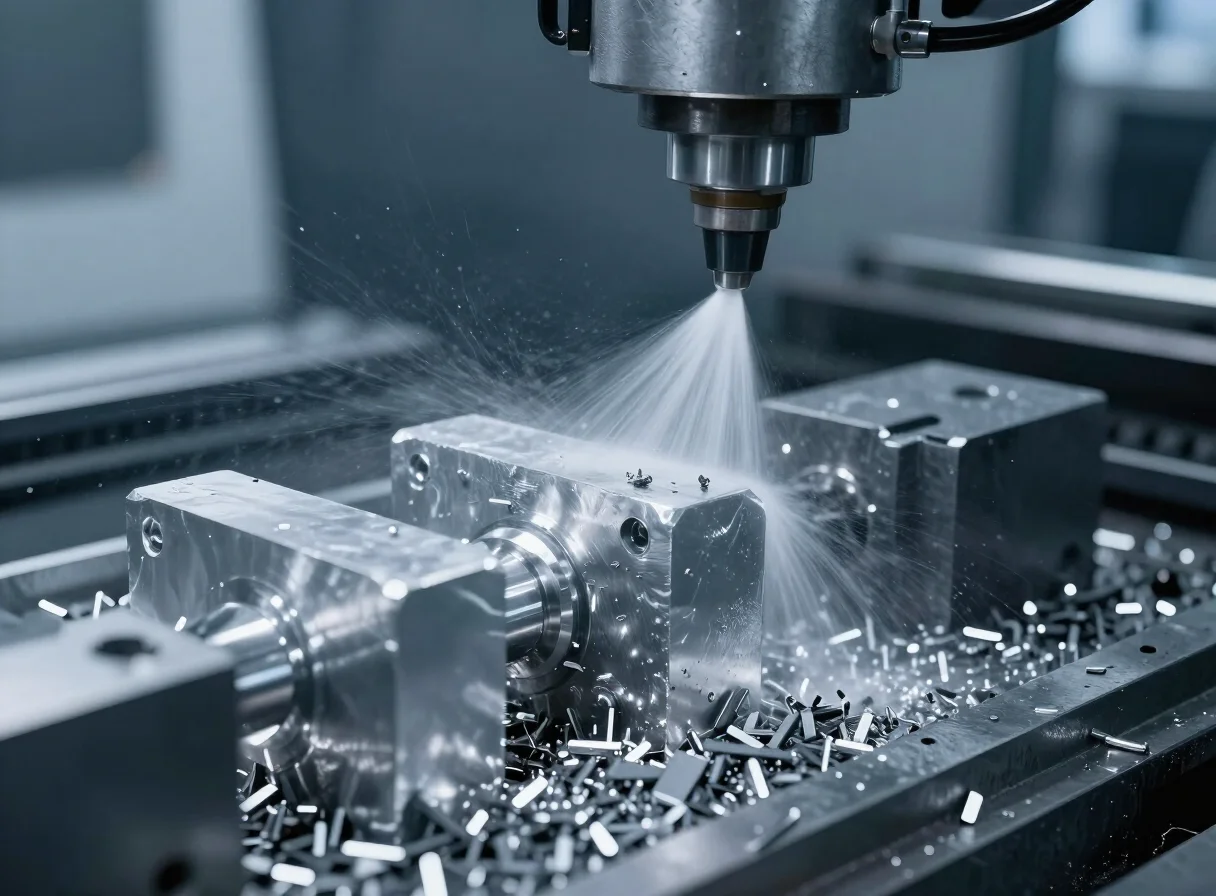
Receive a more useful blank.
We can quote cut-to-length supply and drawing-based machining, including milling, 钻孔, tapping, slots, chamfers and deburring. Surface finishing such as anodizing can be discussed for the intended appearance and duty.
Send: a dimensioned drawing, 数量, datums, critical tolerances, thread details, surface finish and any coating allowance. Define whether dimensions apply before or after finishing.
Agree the evidence before production.
Our quality-assurance service can be scoped around material identification, dimensional checks, surface inspection and the documentation requested for the order. Mill test reports and additional testing can be arranged subject to availability and agreed scope.
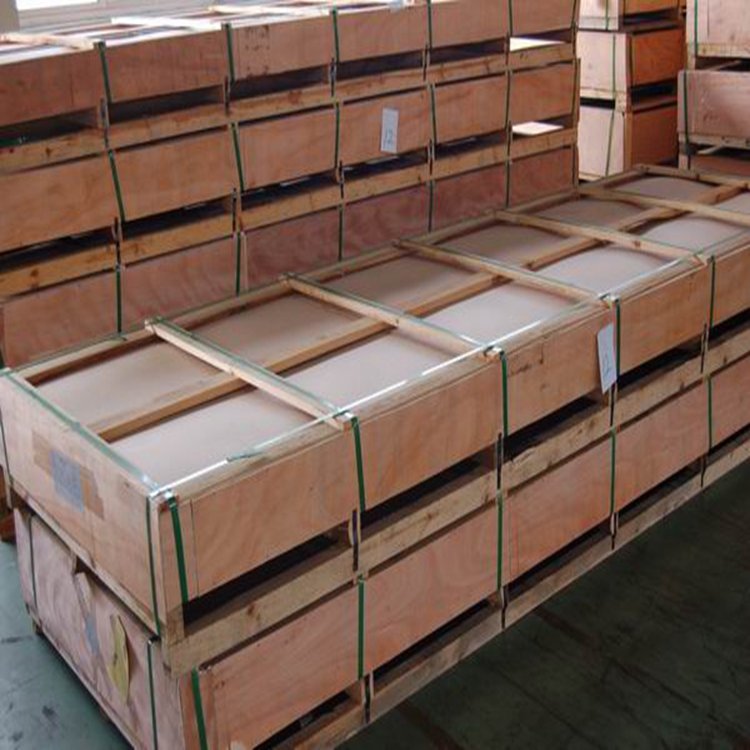
Protect the surfaces. Support the length.
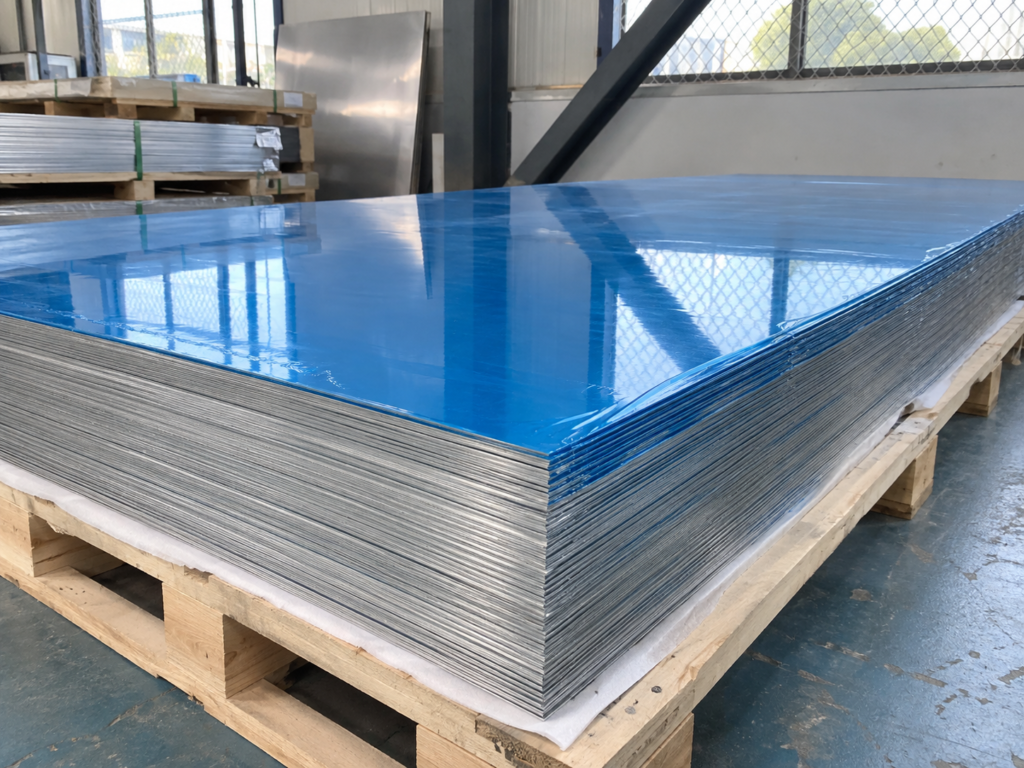
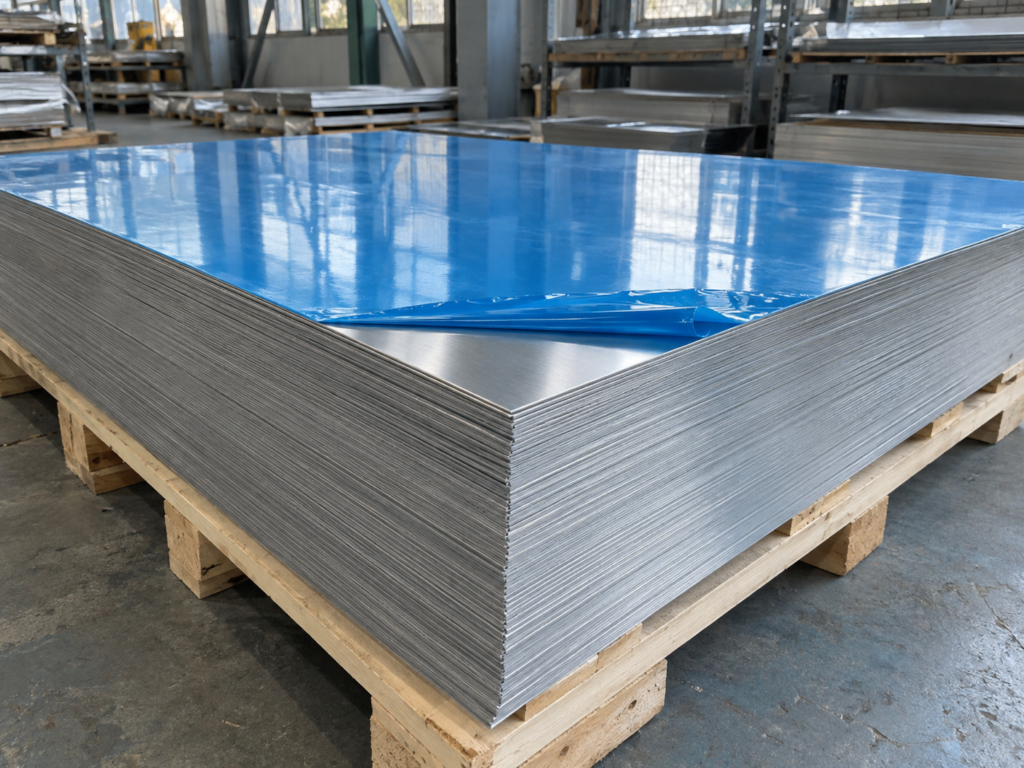
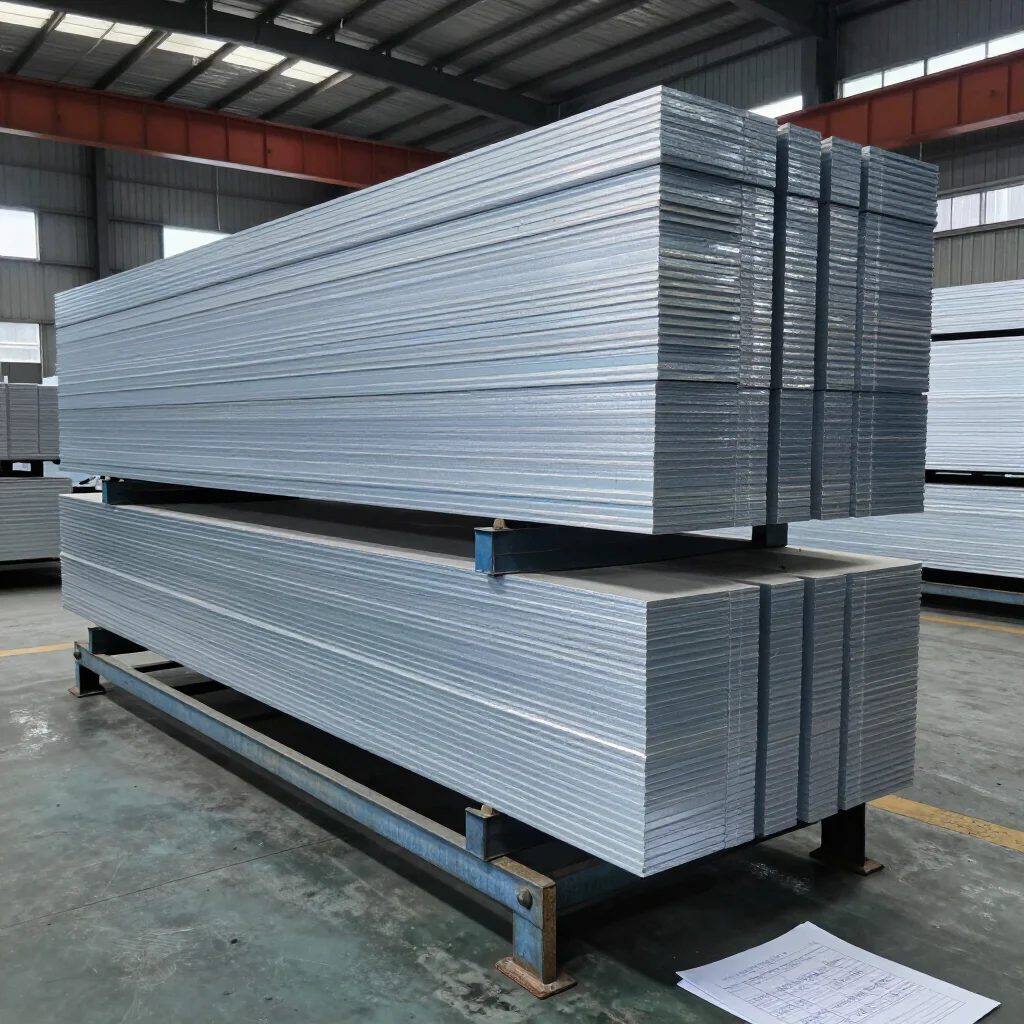
Request interleaving or protective wrap, edge protection and secured bundles on suitable pallets or in wooden cases. Long flat bars need adequate supports to limit bending and movement during handling.
For sea freight, discuss moisture barriers and suitable desiccant. Specify bundle weight, forklift access and piece labels. Export timber treatment or compliant wood packaging is arranged where required by the destination.

Match the route to the shipment.
We can help coordinate suitable courier, air, road or sea freight options according to the delivery location, bar length, weight and urgency. Provide a destination postcode or port for the freight quotation.
Confirm delivery terms, insurance responsibilities, unloading arrangements and required shipping documents. On receipt, compare the packing list, labels and count, then record any transit damage before unpacking further.
Tell us what the finished part needs.
Send the alloy and temper, 厚度×宽度×长度, 数量, manufacturing route, drawing, 结束, inspection requirements and delivery destination.
Specification & acceptance
For extruded bar, discuss ASTM B221/B221M; for rolled or cold-finished bar, ASTM B211/B211M may apply. Material cut from plate follows the agreed plate specification. Confirm the applicable edition, size scope and dimensional tolerances before ordering.
Commercial details
Availability, 最小订购量, price, machining capability and dispatch lead time are confirmed by quotation. If you need a trial piece, sample approval or a repeat-order inspection plan, include it in the enquiry.
Request a flat-bar quotation →
评价
目前还没有评价